How Saccos, Community Football and Electric Motorcycles Are Building a New Grassroots Economy in Kenya By the Project Lead, Club500 | Ubuntu Impact Labs
There is a moment at the end of every community football match that most people never think about. The final whistle blows, the crowd drifts away, and a few dozen young men walk home with no income, no savings and no clear next step. The talent was on the pitch. The opportunity was not. Club500 exists to change that moment. And this month, around a breakfast table in Nairobi, we showed seven of Kenya's most important financial institutions what the change can look like on two wheels. A breakfast with a purpose Club500 is Ubuntu Impact Labs' national flagship initiative to turn grassroots football clubs into professionally structured, community-owned and commercially viable institutions. Our target is 500+ clubs across all 47 counties by 2028, supported by eight pillars: Legal and Governance, Ownership and Stakeholder Management, Technology and Data, Commercialization, Branding and Media, Banking, Finance and Sustainability, Infrastructure, and Health and Performance. Pillar six, Banking, Finance and Sustainability, is where this story begins. A club cannot grow on goodwill alone. It needs bank accounts, payment systems, disciplined savings and, above all, patient capital that understands community. That is why we convened our financial pillar partners for a breakfast meeting:
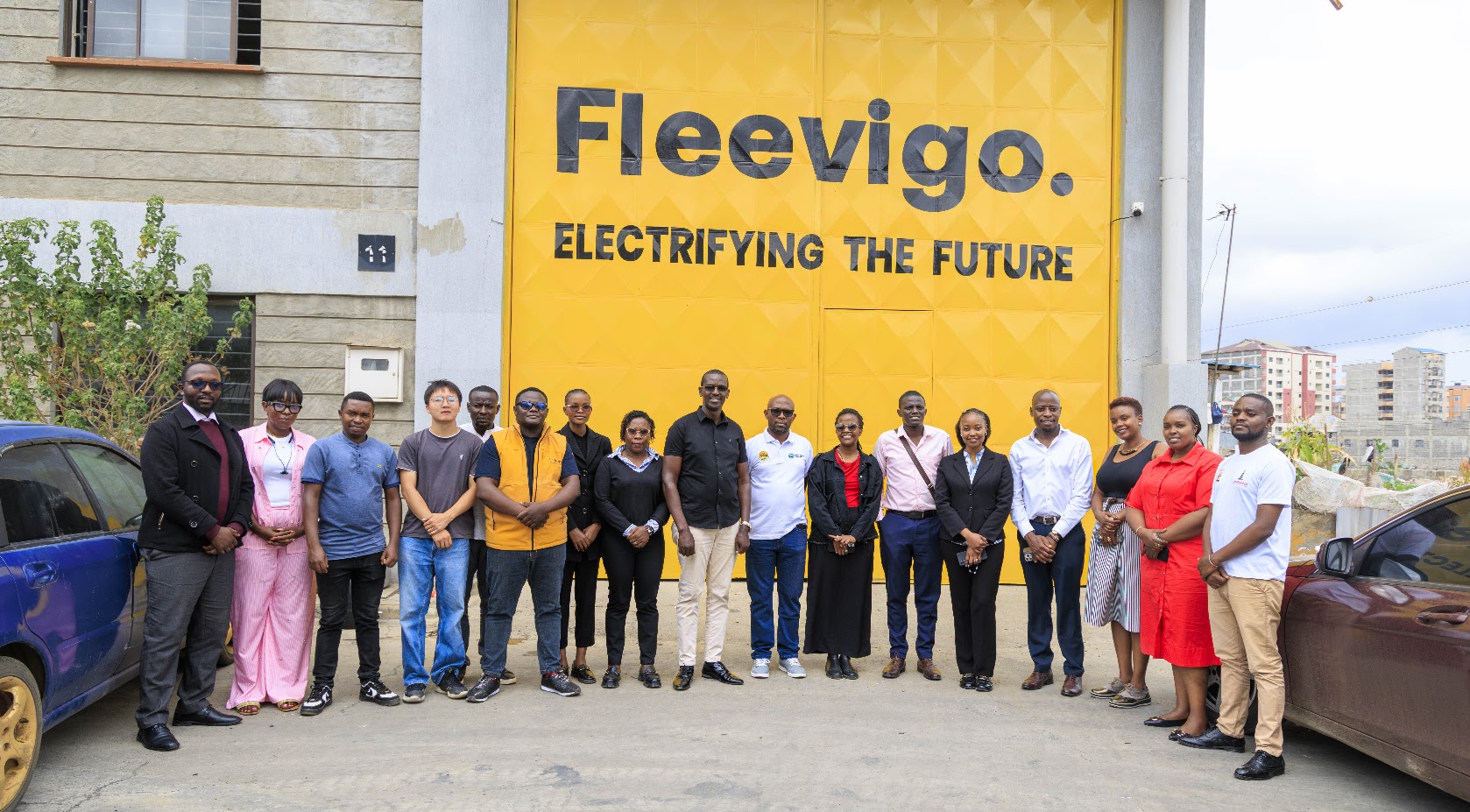
• K-Unity Sacco • Amica Sacco • Stima Sacco • Unaitas Sacco • Emerald Sacco • Tower Sacco • Tai Sacco These are institutions built on a simple and powerful idea: ordinary people, pooling their money, lending to each other and growing together. Saccos hold the savings of teachers, engineers, traders, civil servants, boda boda riders and market women. They know the communities Club500 serves because their members are those communities. The question we put on the table was direct: what happens when electric mobility, community football and sacco finance work as one system? Why electric motorcycles, and why now Club500 has now partnered with four electric vehicle companies. At this breakfast we put the spotlight on one of them: Fleevigo, a Kenyan electric mobility company whose model shows what the transition can do at street level. Fleevigo has so far empowered approximately 280 riders. Its riders earn an average of about KES 15,000 per week through ride-hailing platforms such as Bolt, which Fleevigo helps them onboard onto. Motorcycles are provided through a Lipa Mdogo Mdogo arrangement, so a rider does not need to raise large upfront capital. Fleevigo also provides medical accident cover for fleet riders, subsidises selected spare parts and trains riders in basic servicing to keep downtime low. Behind the motorcycles is a business ecosystem. Through its DUKA DUKA programme, Fleevigo works with 20 battery-swap partners, mostly existing shop owners who have added swapping to their businesses. Two examples tell the story: • Margaret joined as a swap partner in April 2026 and, by November 2026, had earned approximately KES 800,000 from battery swaps alone. • Charles, who runs a spare-parts business, has earned over KES 700,000 from swaps, while Fleevigo has bought spare parts worth more than KES 500,000 directly from his shop. Fleevigo has also partnered with PIR Kenya to put seven young men from a Nairobi orphanage onto electric motorcycles, giving them income and a path to financial independence. And the growth path is steep. Fleevigo projects over 3,000 electric motorcycles and more than 100 battery-swap stations in 2027. It has 400 additional motorcycles arriving shortly, and it has launched in Kisumu, with a target of 100+ motorcycles there by April 2027.
The numbers that got the room's attention A sacco is, at heart, a financial analyst with a community conscience. So we gave the room the arithmetic. These are illustrative calculations built on Fleevigo's reported average of KES 15,000 per week, gross, before operating costs and repayments: • One rider: roughly KES 60,000 or more in gross monthly earnings. • 600 motorcycles through football clubs (Fleevigo's stated Club500 ambition): roughly KES 9 million in gross earnings every week, or around KES 468 million a year circulating among young people in club communities. • 3,000 motorcycles by the end of 2027 at the same average: more than KES 2.3 billion a year in gross rider income across the network. Compare this with Club500's own target of mobilising KES 1 billion+ in local investment and creating 5,000+ jobs across the football value chain by 2028. An electric motorcycle is not a donation. It is an income-producing asset, and income-producing assets are exactly what a lender wants to finance. What football adds that a spreadsheet cannot A football club is one of the most organised communities in any Kenyan neighbourhood. It has a membership list, a leadership structure, regular meetings, a shared identity and, crucially, social accountability. Players and officials know each other, train together and answer to each other. That is a lender's dream and a rider's safety net. When motorcycles are deployed through clubs: • Riders are known. Each is vouched for by a community that has watched them play, coach or volunteer for years. • Peer support is built in. Club members help each other through repairs, schedules and bad weeks. • The club earns too. Income-generating assets strengthen club finances, so the club can pay for kits, pitches, physiotherapy and academies, which are the very things Club500 is building. • Young people stay engaged. A player with a livelihood is a player who can afford to keep playing, coaching and mentoring. This is the dimension Fleevigo calls connecting sports, entrepreneurship and sustainable mobility. At Club500, we call it the football economy done properly. The Fleevigo and Ubuntu Impact Labs partnership Our partnership with Fleevigo is formalised in a Memorandum of Understanding between Fleevigo and Ubuntu Impact Labs Limited. At the breakfast, we walked the saccos through the spirit of that agreement: that electric mobility should create economic opportunity in the communities where it operates, and that organised football communities are a credible, structured channel for doing so. Editor's note before publication: The MoU text itself was not in the materials available when this article was drafted, so I have not quoted any clauses. Please paste the agreed points (for example: deployment targets through clubs, club revenue-sharing, rider onboarding and training, financing arrangements, data and reporting, branding) and I will place them here word for word. What Fleevigo has stated publicly is the anchor: an ambition to facilitate over 600 electric motorcycles through football clubs, so that club members earn income while the clubs themselves become more financially sustainable. How saccos and Club500 work together The sacco relationship is not a sponsorship. It is a financing partnership, and it operates on two levels. Level one: the clubs. Under Pillar six, Club500 helps clubs set up proper banking, integrate M-Pesa and other payment systems, and plan finances over the long term. Saccos bring savings products, structured lending and financial literacy. A club that banks properly, keeps clean books and has income-generating assets becomes bankable. Level two: the whole community. The saccos are not limited to Club500. They are the primary financing partners for electric vehicles for their entire membership: the teacher who wants a motorcycle for her son, the shopkeeper who wants to become a battery-swap partner, the group of friends pooling savings for a small fleet. Sacco members already trust their institution. They save with it and borrow from it. Offering EV financing through that same trusted channel puts clean, productive mobility within reach of people who banks often overlook. In practice, the flow looks like this: 1. Club500 identifies and structures community football clubs, putting legal, governance and banking foundations in place. 2. Fleevigo supplies electric motorcycles, battery-swapping infrastructure, rider training, accident cover and income access. 3. Saccos provide the finance that turns a motorcycle into an asset a member or club can afford, through affordable, structured repayment. 4. Riders and club members earn, repay, save and build credit histories. 5. Battery-swap partners grow their shops. The wider community gets cleaner air, lower running costs and more local jobs. Every party wins when the model works: riders earn, saccos lend to productive assets, clubs gain revenue, and Fleevigo grows. The point is that nobody has to be charity to make it work. What makes this different from ordinary asset finance • Community-owned risk management. Club structures and sacco membership add two layers of social accountability around every loan. • Income visible from day one. Ride-hailing earnings give a clear, trackable repayment source. • Lower running costs. Electric motorcycles cost far less to power and maintain than petrol equivalents, which improves a rider's margin and repayment capacity. • A full ecosystem. Training, spare-part subsidies, medical cover and swap stations reduce the risks that usually derail asset finance for informal workers. • Data. Club500's technology pillar brings performance tracking and digital engagement tools, which can make members' financial behaviour visible and rewardable over time.
The wider prize Club500's outcomes for 2028 are clear: 500 fully structured clubs, 500 youth academies, 5,000+ jobs and KES 1 billion+ in mobilised local investment. Electric mobility, financed through saccos and deployed through football communities, gives us one of the most practical routes to those numbers. It does so without waiting for a stadium to be built or a sponsor to be found, because it turns a club's greatest asset, its people, into earning power immediately. It also positions Kenya to export a model. Clean transport, member-owned finance and community sport, joined together, are a blueprint that other African countries can adapt. What comes next • Pilot clubs and sacco-backed financing structures to be confirmed with each partner sacco. • Rider and club onboarding sessions with Fleevigo, including servicing training and financial literacy. • Expansion tracking alongside Fleevigo's 2027 targets: 400 motorcycles arriving, 3,000 on the road, 100+ swap stations and Kisumu's 100 motorcycles by April. • Reporting back to all partners and clubs on jobs created, income earned and loans performing. Join the movement To the saccos at that breakfast table: you have spent decades proving that when people pool resources, whole communities rise. To the football clubs of Kenya: you have spent decades proving that when people gather around a shared passion, they build something bigger than themselves. Club500 is where those two truths meet, on a pitch, on a motorcycle and on a balance sheet. The whistle has blown. The next half is ours. Join the Movement. Be Part of Club500.
Peter Oraya | Project Lead, Club500 Peter Oraya is a venture builder, data scientist, and entrepreneur passionate about leveraging technology, data, and innovation to drive Africa's socio-economic transformation. He serves as the Project Lead at Club500.

The conversation
No comments yet — start the conversation.