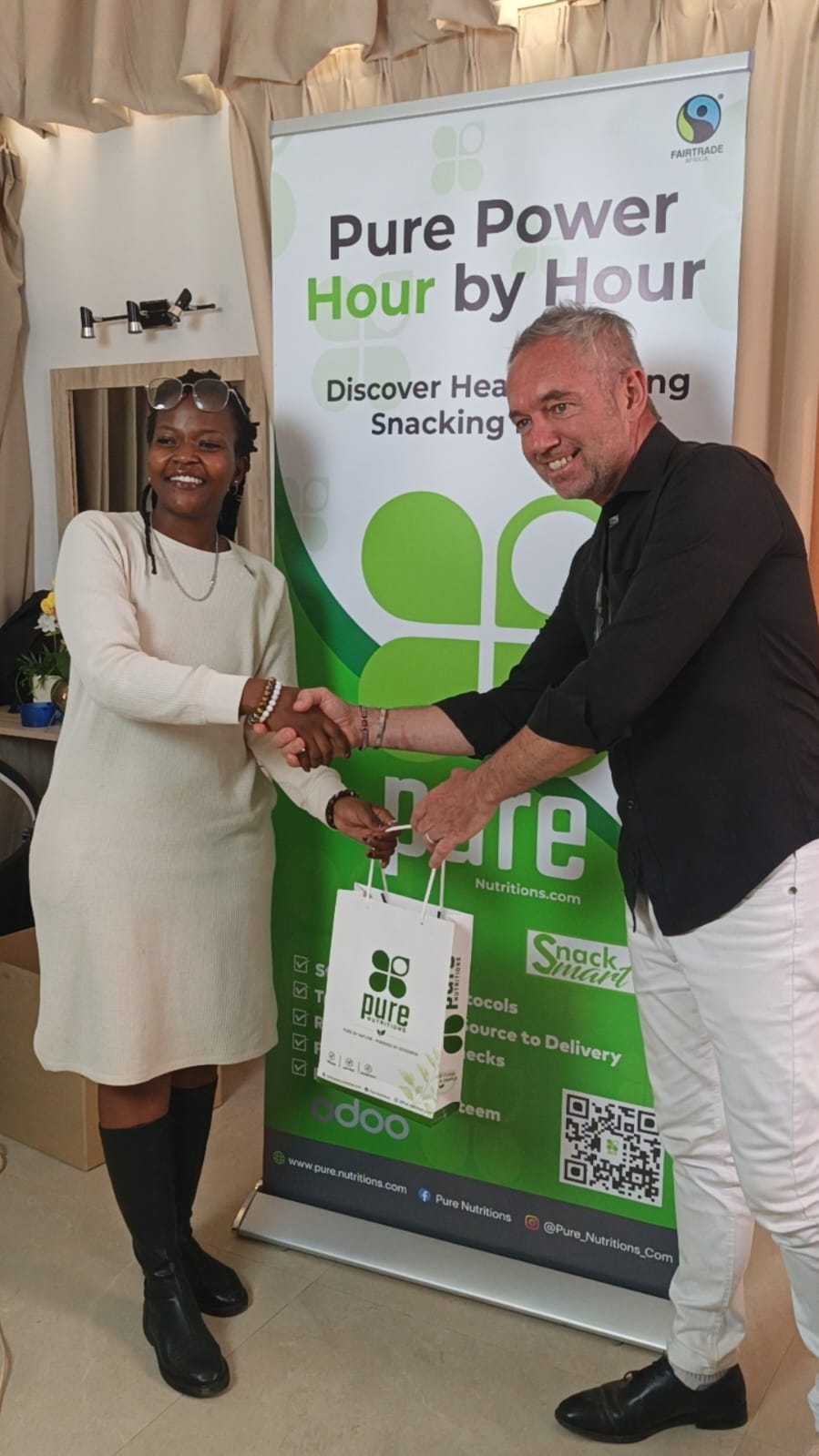
Talent is everywhere in Kenyan grassroots football. What’s scarce is fuel, funding and structure. Pure Nutrition founder Jean-Jean-Pierre RS Fortain thinks a humble snack can help change that.
Great football doesn’t start when the whistle blows. It starts hours earlier, with what a player ate, who backed their club, and whether anyone believed the dream was worth funding. As a Food Security Specialist, I’ve long argued that performance on the pitch is tied to security off it. So when Jean-Jean-Pierre RS Fortain, Founder of Pure Nutrition, told me he sees snacks as a tool for building football institutions, I wanted to hear the full argument.
Edwin: Jean-Pierre , you grew up in Belgium in a family rooted in chocolate. How does a chocolate heritage end up in Kenyan grassroots football? Jean-Pierre : My family taught me that food is more than something we consume. It’s culture, craftsmanship, quality, and a way to bring people together. My journey took me across Africa, including South Africa, and now to Kenya, where I’m building Pure Nutrition. Our mission is to bring quality, nutritious snacks closer to everyday consumers, with responsible sourcing and innovation. But I kept asking myself: how can nutrition be part of a bigger story of community development? Club500 was the answer. Edwin: Why football, and why grassroots? Jean-Pierre : Because grassroots football is one of Africa’s most powerful community institutions. It brings together young people, families and businesses around a shared dream. Yet behind the passion, many clubs struggle with limited resources, inadequate nutrition and few ways to earn income. Supporting them should go beyond supplying products. It should mean helping create an environment where players can develop, clubs can grow and communities can prosper. Edwin: Club500 has a Health, Nutrition and Performance pillar. Where do you fit in? Jean-Pierre : That’s our entry point. Our superfood products and nutritious snacks can become part of a broader conversation about player wellbeing and informed food choices. Nutrition works alongside training, rest, hydration and medical support. It isn’t a magic fix. But you cannot build talent on an empty stomach. Edwin: Let’s talk about the model. How does this turn a club into an opportunity? Jean-Pierre : What excites me about Club500 is its belief that a football club can be both a sporting institution and a sustainable community enterprise. Clubs can sell Pure Nutrition snacks to fans, members and their local communities. Match days, club events and fan gatherings become new channels for income. It creates a practical cycle. Fans enjoy quality products, clubs access additional commercial opportunities, and the community takes part in building a more sustainable club. A snack stops being just a product on a shelf. It becomes part of a club’s journey towards financial independence.
Edwin: Is this just about snacks? Jean-Pierre : Not at all. My ambition is to see this grow beyond individual transactions into a lasting partnership across Kenya. Through Club500 we’re bringing nutrition, commerce and community impact into one ecosystem, so clubs benefit from our products and the commercial opportunities they create, while players and supporters are encouraged to make healthier choices. For me, that’s the real meaning of building a business in Africa: creating value that reaches beyond the customer. Edwin: Your final word to the clubs? Jean-Pierre : The future of grassroots football won’t be built by talent alone. It will take stronger institutions, better support systems, sustainable income, and partnerships that believe in ordinary communities. We’re not just bringing snacks to football. We’re helping fuel the people, businesses and communities that make the beautiful game possible.
Is your club ready to turn match days into income? Discover Pure Nutrition at www.pure-nutritions.com and the Club500 ecosystem at www.club500.co.ke.
Edwin Kiplagat | Food. Football. Futures. Food Security Specialist and independent football writer at Club500. I cover Kenyan football and grassroots development, and what nutrition, farming, and community health mean for the people who play the game.
The conversation
No comments yet — start the conversation.